

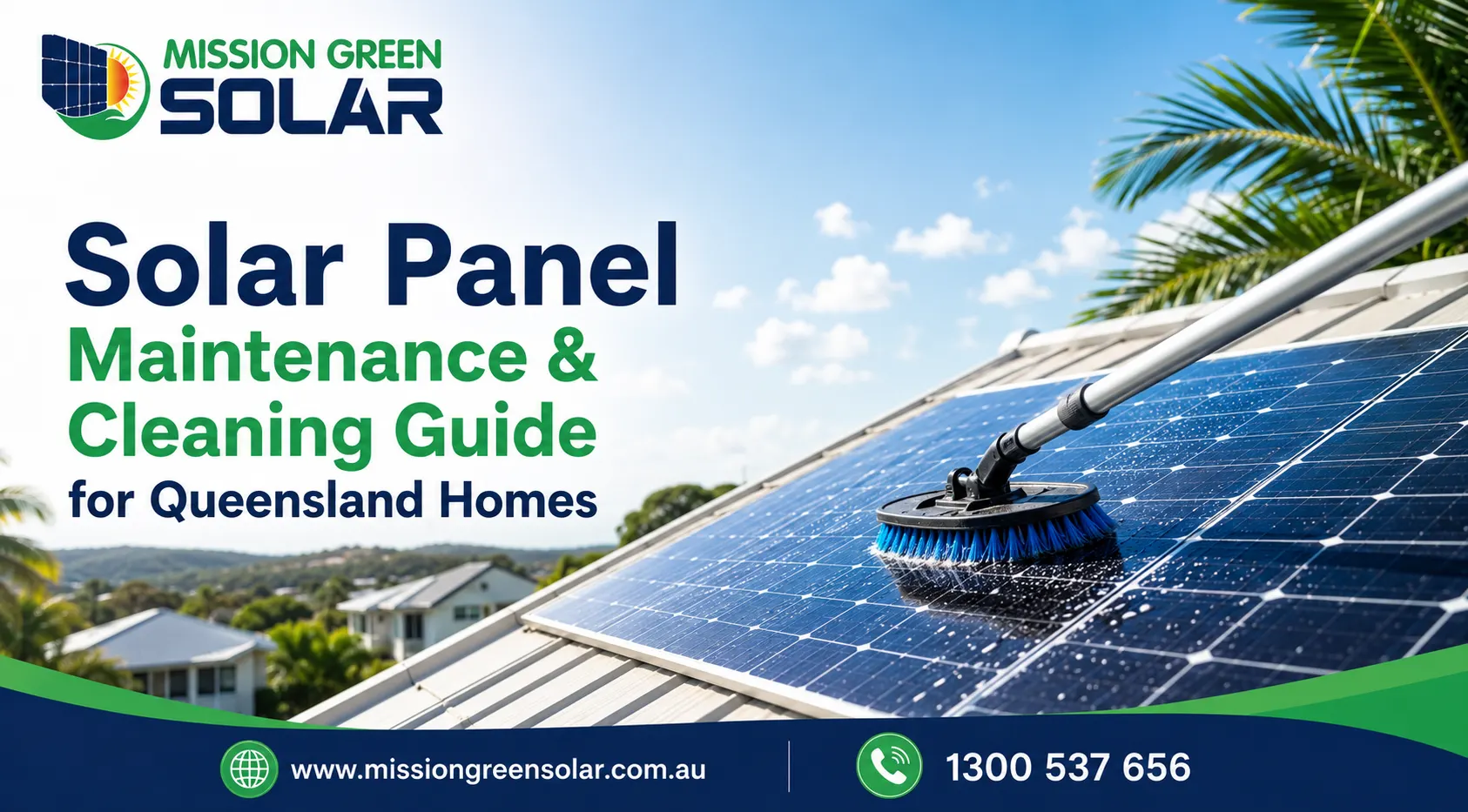
How to protect your investment, keep generation high, and know when to call in the professionals.
If you’ve had solar panels installed on your Sunshine Coast or Mackay home, congratulations — you’ve made one of the smartest financial and environmental decisions available to Queensland homeowners. But a solar system isn’t entirely “set and forget.” Like any outdoor equipment exposed to sun, salt air, storms and dust, your panels need a small amount of regular care to keep performing at their best.
In this guide, we’ll walk through exactly how often to clean your solar panels, what Queensland’s climate means for maintenance, the warning signs that your system needs a professional check, and simple habits that protect your warranty and your power bill savings.
Why Solar Panel Maintenance Matters in Queensland
Queensland’s climate is fantastic for solar generation — but it’s also demanding on equipment. Long dry spells followed by intense summer storms, high UV exposure, coastal salt spray around Birtinya, Mackay and surrounding suburbs, and seasonal pollen all affect how much dirt and residue builds up on your panels.
Dust, bird droppings, pollen and salt film reduce the amount of sunlight reaching your solar cells. Even a light, even layer of grime can lower a system’s output by 5–20%, and heavier buildup or shading from debris can cause more significant losses. Over months, that’s real money coming off your expected savings — the same savings a well-sized residential solar system or commercial solar system was designed to deliver.
How Often Should You Clean Solar Panels in Queensland?
As a general rule, most Queensland homes should have their panels visually checked every 3 months and professionally cleaned once or twice a year. Your ideal schedule depends on a few local factors:
- Coastal properties (salt spray) — clean every 6 months, or sooner if you notice a hazy film.
- Homes near trees, farms or construction — check quarterly for sap, dust or debris.
- Low-pitch roofs (below 10°) — these self-clean less effectively in rain and may need more frequent washing.
- After severe weather — always inspect after hail, heavy dust storms or bushfire smoke haze.
A simple way to know if it’s time: compare your current generation data (visible in your inverter app or monitoring portal) against the same month last year, on a similarly sunny day. A noticeable, unexplained drop is often the first sign your panels need attention.
A Season-by-Season Maintenance Checklist
Here’s a practical rhythm many of our Sunshine Coast and Mackay customers follow across the year:
| Season | Recommended Action | Why It Matters in QLD |
| Spring (Sep–Nov) | Full visual inspection + wash | Pollen and jacaranda/poinciana bloom debris builds up; ideal time to book pre-summer inverter/output check with your installer. |
| Summer (Dec–Feb) | Storm-damage check after severe weather; light rinse if needed | Storm and hail season on the Sunshine Coast and Mackay coast — check panels, mounting and roof flashing after any major storm. |
| Autumn (Mar–May) | Full wash + gutter and panel-edge debris clear | Leaf litter and dust settle after the wet season; good time to review your last 3 months of generation data. |
| Winter (Jun–Aug) | Visual check; wash if dust/salt build-up is visible | Lower rainfall means less natural rinsing — coastal salt spray and dust can accumulate on panels facing the ocean. |
DIY Cleaning: What’s Safe (and What Isn’t)
Light, ground-level maintenance is fine for most homeowners. For anything involving getting on the roof, we recommend leaving it to a licensed professional — both for safety and because incorrect cleaning can void your panel warranty.
Safe DIY steps (ground-level only):
- Rinse panels from ground level with a garden hose on a cool, overcast morning — never in direct midday sun, as cold water on hot glass can cause micro-cracking.
- Use plain water only. Avoid detergents, abrasive sponges or high-pressure hoses, which can scratch the anti-reflective coating or force water under seals.
- Check your inverter or monitoring app monthly and note any unexplained dip in daily generation.
- Keep an eye out from the ground for visible bird droppings, leaf litter caught in the frame, or loose mounting hardware after storms.
When to call a professional:
- Any cleaning that requires roof access — working at height on Queensland roofs (especially tiled or Colorbond) carries real fall and roof-damage risk without the right equipment.
- Stubborn grime, sap, or salt film that a hose rinse doesn’t shift.
- Any visible cracking, discolouration, hot spots, or a sudden drop in output — these can indicate a cell or wiring issue, not just dirt.
- After hail or severe storm activity, which is common along the Queensland coast in summer.
Protecting Your Warranty
Most panel manufacturers offer 25-year performance warranties, and inverters and workmanship are typically covered separately. However, warranties can be affected by improper cleaning (harsh chemicals, pressure washers, walking directly on panels) or by unlicensed installation work. Two habits protect your cover:
- Keep a simple log of cleaning and inspection dates, plus any photos of your generation dashboard.
- Always use CEC-accredited installers for any physical work on your system, so both installation and any repairs remain warranty-compliant.
Signs Your System Needs a Professional Check-Up
Beyond routine cleaning, watch for these signals that it’s time to book a service visit rather than wait for your next scheduled check:
- A generation drop of more than 15–20% that isn’t explained by weather or season.
- Error messages or warning lights on your inverter display.
- Visible discolouration, bubbling or cracking on individual panels.
- Unusually high power bills despite normal sunlight and usage.
- Your system is 5+ years old and has never had a professional inspection.
| Quick Takeaway • Visually check panels every 3 months; professionally clean 1–2 times a year. • Ground-level hose rinses are fine — leave roof access and stubborn grime to licensed pros. • Watch your generation data for unexplained drops of 15%+. • Always use CEC-accredited technicians to keep your warranty intact. |
Keep Your System Performing at Its Best
A well-maintained solar system keeps delivering the bill savings it was designed for, year after year. Mission Green Solar has been installing and supporting solar systems across the Sunshine Coast and Mackay for over five years, and we’re happy to answer questions about your existing system — even if we didn’t install it. If it’s time for a professional clean, an output check, or you’re simply not sure how your system is performing, get in touch with our team for a free assessment.
Frequently Asked Questions
Does rain clean solar panels?
Rain helps rinse away light dust, but it won’t remove sap, bird droppings, salt film or ground-in grime — and Queensland’s dry winters mean panels can go months without a decent wash from rainfall alone.
Will dirty panels damage my system?
Dirt itself won’t usually damage the panels, but uneven soiling can create “hot spots” where shaded cells work harder than the rest, which over time can shorten the life of that cell. It’s a performance and longevity issue as much as an output one.
How much does professional solar panel cleaning cost?
Pricing varies with system size, roof height and access, and how long it’s been since the last clean. It’s best to get a quick, obligation-free quote based on your specific system.
Can I claim solar panel maintenance as part of a warranty service?
Routine cleaning generally isn’t covered under manufacturer warranties, but genuine faults — cracked cells, wiring issues, underperformance versus spec — usually are. A professional inspection can tell you which category you’re dealing with.
Ready for a professional solar health check? Book a free assessment with Mission Green Solar’s CEC-accredited team — call 1300 537 656 or request a quote online.




















 1300 537 656